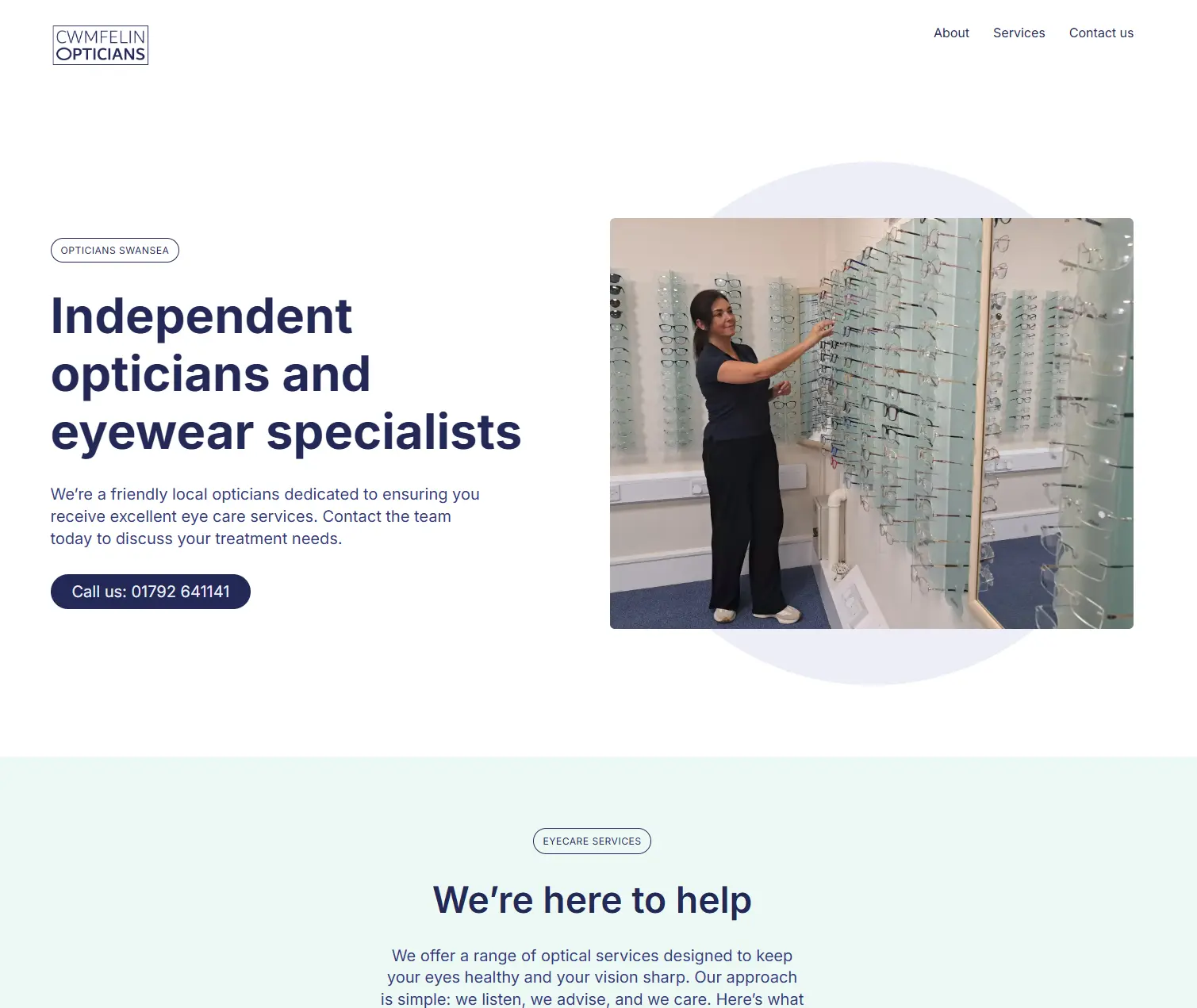
A website can look finished and still fail commercially. The layout is tidy, the photos are sharp, and the enquiry picture hasn’t moved. Looking finished is not the same as winning the right work.
Marketing-led web design treats the website as one part of a system: the site itself, SEO, monthly improvement, and tracking. Design and development serve how you win work — who you want, what you sell, why someone should choose you, and what they do next — rather than sitting in front of that brief.
Brandspace is marketer-owned, which is why the website management service stays tied to enquiries and clarity after launch, not only to a launch-day screenshot. You can see how that shows up on our website plans.
What marketing-led actually means here
Before anyone pushes pixels, we get specific.
- Goals: more of the right enquiries, a clearer offer, less owner time spent explaining the business on every call
- Audience: high-ticket buyers who decide on trust, not bargain hunters
- Offer: what you sell now, including the services you actually want more of
- Enquiry path: what someone does when they’re ready — form, call, chat, booking
- Then design: layout, type, and pages that make those decisions easier
Copy moves with the design. You shouldn’t be left writing the commercial argument after the visuals are already locked.
Where developer-led projects drift
Plenty of developer-led shops build clean, fast sites. The drift shows up after go-live.
Attention was high during the build. Then the brief shrinks to tickets and technical upkeep. Nobody is asking whether the hero still matches the sales conversation, whether proof is thin, or whether a new service needs a page. The craft is fine. Commercial ownership went missing.
Marketing-led work keeps those questions in the monthly rhythm. We still design and build. We just don’t treat the website as finished because the homepage shipped.
Templates, “fully custom”, and proven conversion patterns
Owners comparing website options often get stuck on a false fork: a cheap template shopfront, or a long “fully custom” project that reinvents every layout from scratch. The useful question is whether the layout is built to win enquiries, then tailored to you.
A generic template can look acceptable in a demo. High-ticket buyers still notice when the proof is thin, the offer is vague, and the page shape matches six competitors in the same town — weak or buried calls to action, cookie-cutter testimonials, and no serious path for the service you actually want to sell more of.
Starting every page from a blank artboard sounds premium. It often means long timelines and a layout that still has to solve the same problems every service-business site already has: explain the offer, show proof, make the next step obvious. Custom craft is valuable when it serves the brand and the enquiry path. It is expensive when it delays a core site that could already be live.
We start from proven conversion patterns for service businesses, then tailor brand (colour, type, photography, tone), message (who you help, what changes for them, why they should enquire), and niche (services, proof, and paths that match how you sell).
What you still get that’s yours: your look, your copy, your offer, your proof. After the initial term, the site itself is yours. Other Brandspace clients won’t be running a carbon copy of your homepage, because the conversion pattern is the starting point, not the finished brand.
Where SEO sits: from the build, not after launch
The usual advice is to finish the website, then “do SEO” once it is live. That delay is how sites launch with thin pages, vague titles, and no search plan, then spend a year trying to catch up.
Search is not a coat of paint you add when the design is done. The pages you launch, the headings you write, the services you give a URL, and how proof and enquiry paths are structured either help people find you, or make it harder. Building SEO into the website from the start means the core is already organised around how buyers search, while it is also built to convert.
On website plans, on-site SEO is baked into how we design, write, and build: service and location pages structured around real search demand, clear titles and headings, technical basics (speed, mobile, indexing, clean URLs), internal links, and ongoing on-page improvement as offers change.
SEO packages add the off-site work the website plan does not cover — link building, entity building, and Google Business Profile management. Those are meant to run alongside the site, not wait for a second project. On-site SEO gives you pages worth ranking; off-site SEO gives those pages a chance to be found.
If we are rebuilding or substantially reworking a site you already have, SEO still belongs in that work from day one: redirects planned, useful URLs kept where we can, and the new core shaped for search as well as conversion. You can run the website plan on its own. Visibility grows faster when the SEO package is in from the beginning.
How this shows up month to month
After launch, you drop tasks in the client portal as the business moves. Alongside that, we come with a short list of commercial next steps: a clearer path, stronger proof, a page the offer now needs. The website management service funds that conversion loop — review performance, suggest the next move, implement it inside the plan.
We keep coming back to the places high-ticket buyers actually decide:
- Homepage hero: who it’s for, what you do, why they should care
- Service pages: offer clarity, next step, proof next to the claim
- Enquiry path: form, call, chat — whether the ask matches how you sell
- Proof: testimonials, work, people — whether it still feels current
- Mobile: can someone act without pinching and guessing
A typical month is a handful of commercial moves, not a second rebuild:
- Copy shifts on a hero or service page so the message matches the sales conversation
- Layout tweaks that make the next step obvious
- Proof swaps: a stronger quote, a better case, updated team details
- A clearer path to enquire on mobile
- On Growth and PRO, a new page when the offer needs one
This is on-site conversion work. It is not an SEO campaign, and it is not endless A/B testing. We look at what’s getting in the way of enquiries, change the highest-leverage parts, and review. Formal testing happens when the traffic and the question are big enough to justify it. We don’t promise a lead number — markets and offers sit outside what a layout change can guarantee — but we do own making the live site better at turning the attention you already get into the right enquiries.
Unlimited website updates on PRO, and monthly update time on other plans, are how you request changes: a phone number, a photo, a paragraph that’s gone stale. Conversion improvement is the work we bring — looking at whether the site is still doing its commercial job, then using plan time to implement. You need both. One is reactive. The other is the partnership thinking about enquiries.
Who this is for
Brandspace builds and manages websites for ambitious service businesses that sell high-ticket work and want a long-term partner, not a launch-and-disappear project. You’re likely a strong match when most of this feels familiar:
- You sell services where trust, clarity, and reputation close the sale
- The website should bring in better enquiries, not only look sharper
- Offers, proof, and team details change often enough that a finished brochure goes stale
- You want ongoing support without chasing tickets or paying hourly for every tweak
- You’re ready to treat the site as a commercial system, with someone accountable after launch
A great fit includes dentists and healthcare clinics, lawyers, accountants and other professional services, consultants and specialist B2B firms, and other high-ticket local or national services. Practices and firms that win on trust need a site that feels like the standard of the work — and that keeps earning once it’s live.
Usually a weaker fit: ecommerce product stores (outside our scope), and startups or owners who want the lowest monthly number with no budget for the ongoing system. Owners in that place usually get more from a different kind of provider.
Proof in practice
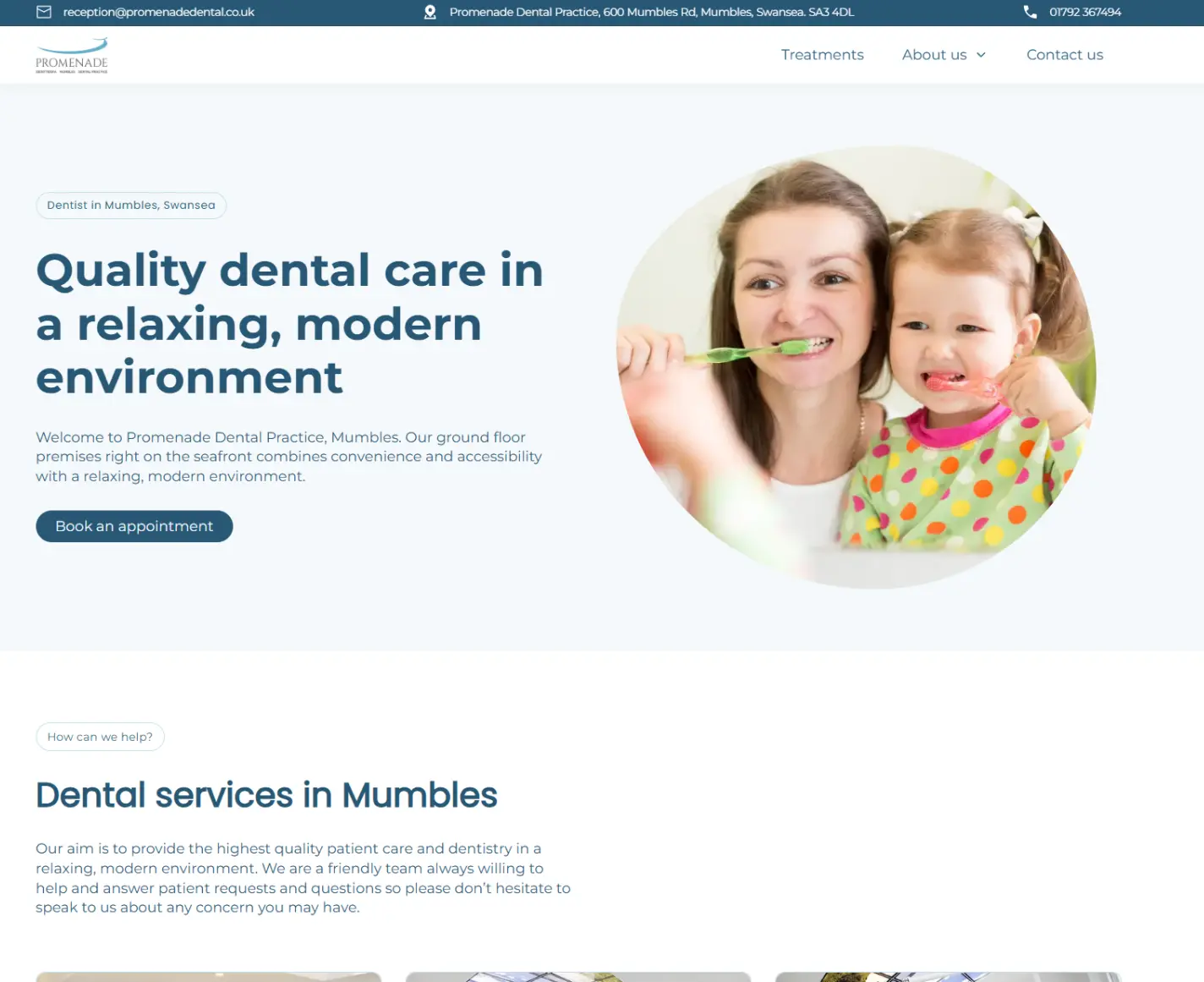
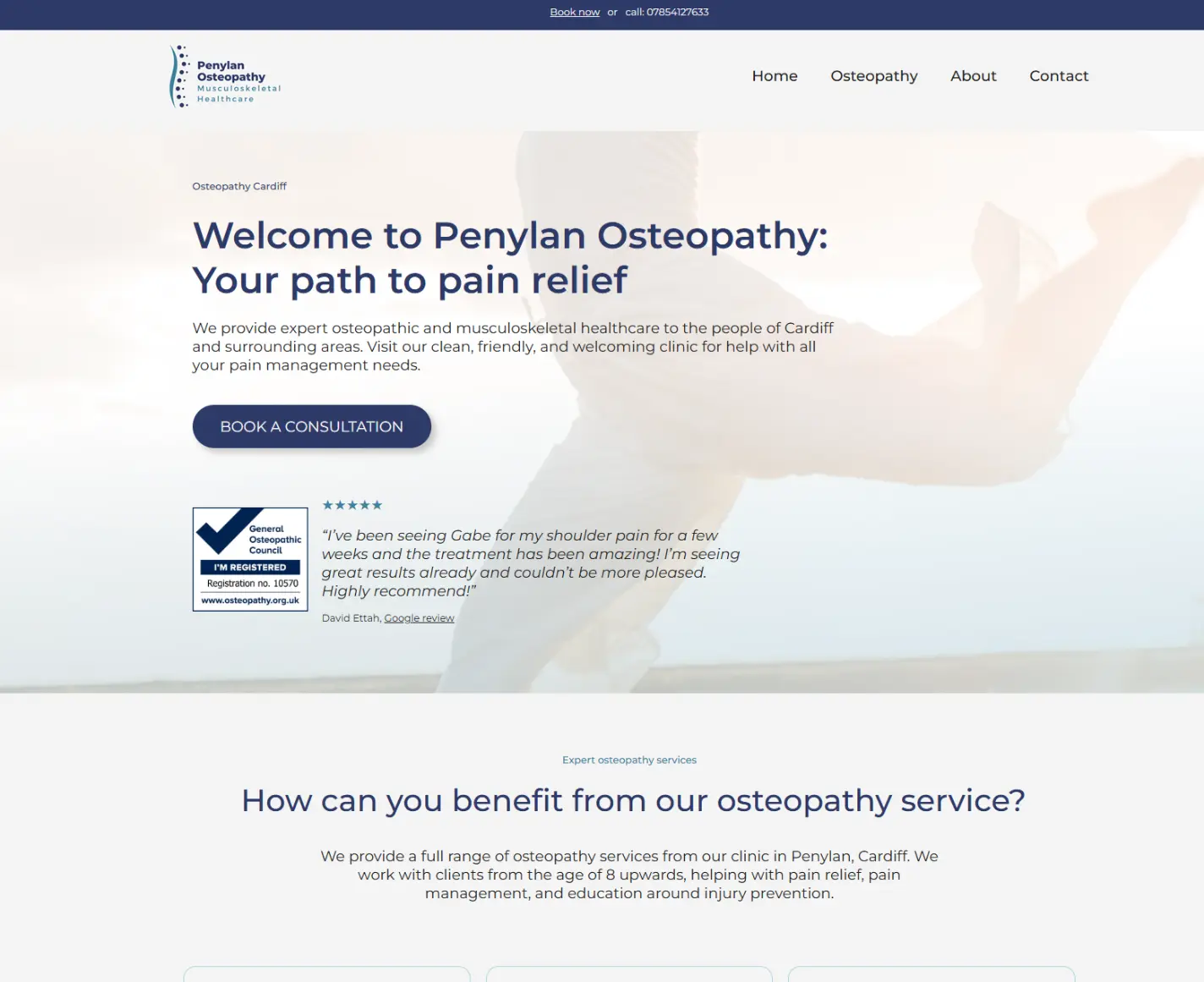
Service businesses on this kind of partnership do see the site work harder. GCG Dental Practice saw around a 30% increase in website traffic after redesign and ongoing management. Penylan Osteopathy went from no website leads to a steady flow. Results always depend on market and execution, and we don’t promise specific numbers. More examples live on our work page.
FAQs
Is this the same as hiring a marketing agency?
The core offer is the website management service: design, copy, hosting, updates, monthly improvement, and on-site SEO baked into that work. SEO packages sit alongside for off-site work such as link building, entity building, and Google Business Profile management. They work best when they run at the same time.
Do you still design the site?
Yes. Design follows the commercial brief rather than sitting in front of it. Brand, photography, copy, and niche detail are where the site becomes yours — the shared starting point is the commercial structure, not a cloned visual.
Is this a theme / template?
We start from proven conversion patterns, then tailor them. You are not buying an off-the-shelf theme with your logo dropped in.
Where does SEO sit? Can I add it later?
On-site SEO is part of the website plan from the start. Off-site SEO is the add-on, and it should run in parallel, not after launch. You can add the SEO package later — you’ll have lost time, because the site will have launched without the off-site support that helps it get found. We would rather start both together. Detail sits on SEO packages.
How is monthly improvement different from unlimited updates?
Updates are changes you request. Conversion improvement is the commercial review and implementation we run as part of the website management service. PRO includes unlimited routine updates so those two can happen without extra invoices.
Do you build ecommerce sites?
No. We don’t build product stores. Service businesses and professional services only.
How much does it cost?
Plans start from £750 plus a monthly fee. See website plans, or book a free call.
Book a free call
If you want a website that starts from business goals and keeps those goals in view after launch — with conversion patterns, SEO from the build, and monthly improvement in the same system — get in touch for a free call. We’ll talk through your market, your site, and whether a managed plan is the right next step.