
When it comes to building your small business website you’re spoilt for choice.
There are so many different ways to create a website. While choice is a good thing, it can also be overwhelming. Especially when you have a million other things to worry about!
In this article, we give you a quick introduction to three of the most common ways to build small business websites.
Take a look and see if any are a good match for your needs.
Website builders and content management systems (CMS)
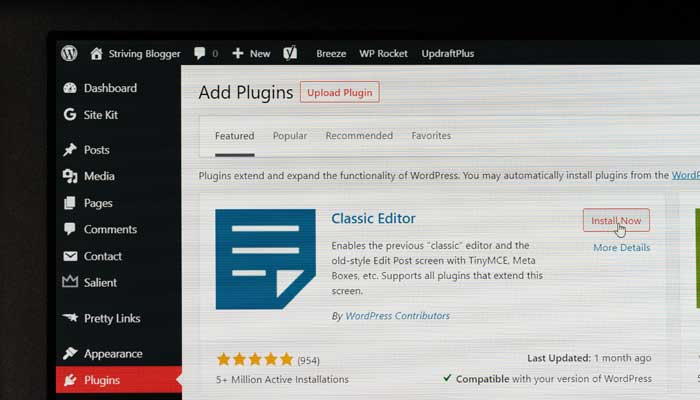
While it’s good to have an awareness of the main web programming languages, the good news is you don’t need to be fluent in them to build or manage a website for your small business.
This is where website builders and content management systems (CMS) come to the rescue.
WordPress
Here’s an amazing stat for you – WordPress is used by 43.2% of all websites on the internet. (W3Techs, 2022).
It’s used by everyone from hobby bloggers to Fortune 500 companies like NFL, NBC, and CNN. It’s the platform we use to create and manage websites, and the one we’d always recommend you use.
WordPress is open-source software you can use to create websites, blogs, or apps. It is hugely customisable through the use of themes, plugins and custom code.
It comes with a learning curve but you could definitely learn to use WordPress and use it to build a website for your small business. However, to get the most out of it, it’s worth working with a professional WordPress web designer.
As it’s open-source the WordPress software is free. Along with the huge library of free plugins and themes, there are an equal amount of paid-for premium plugins.
2. DIY website builders
While WordPress is very similar to website builders in many respects it comes with a few key differences.
Firstly, it’s open-source whereas website builders are proprietary software. Technically WordPress is a CMS as opposed to a website builder. WordPress doesn’t come with built-in hosting and a domain name.
DIY website builders are software that allows you to build a templated website with absolutely no coding ability; all pages are made with a visual drag-and-drop editor. Everything is included, from hosting to design (usually templates). They are an excellent way to get online quickly and are a really good option for micro-businesses.
Some of the most popular website builder platforms include WIX, GoDaddy, and Weebly. Prices for business packages start at around £15 a month, so they have a low cost of entry.
They are definitely an excellent choice for new or micro businesses, allowing you to get online quickly. However, as your website grows you’re going to be looking for more control over the functionality and design of your website.
That’s why we still recommend WordPress over website builders.
3. Bespoke web design and development
Another option you could consider is working with a web development company that has its own proprietary CMS.
This is a good choice for larger businesses and those looking for custom development support. However, it’s worth noting that everything you could do with a custom-built CMS you could probably do with WordPress.
Bespoke web development can also be a good choice for businesses needing specific industry support where the agency specialises. Things like real estate, ticketing and rail travel.
Bespoke development will typically start at around £5,000 per project.

I’m a marketer based in Wales, UK. I love working with ambitious small businesses and helping them unlock the full potential of proper marketing. I created Brandspace as the starting point for doing this, and while we focus on websites and search, I can provide full strategic marketing support for your business.